Following Aphrodite: A Mythological Trail Across Cyprus
From her birthplace in the sea foam to her sacred sanctuary in the mountains, trace the goddess of love across the island
The Goddess of Cyprus
Aphrodite — known to the Romans as Venus — is the Greek goddess of love, beauty, pleasure, and procreation. And while she is worshipped across the ancient world, Cyprus is unequivocally her island. The name “Cyprus” itself may derive from the Greek kypros, meaning henna, a plant associated with the goddess. Homer called her Kypris — the Cypriot.
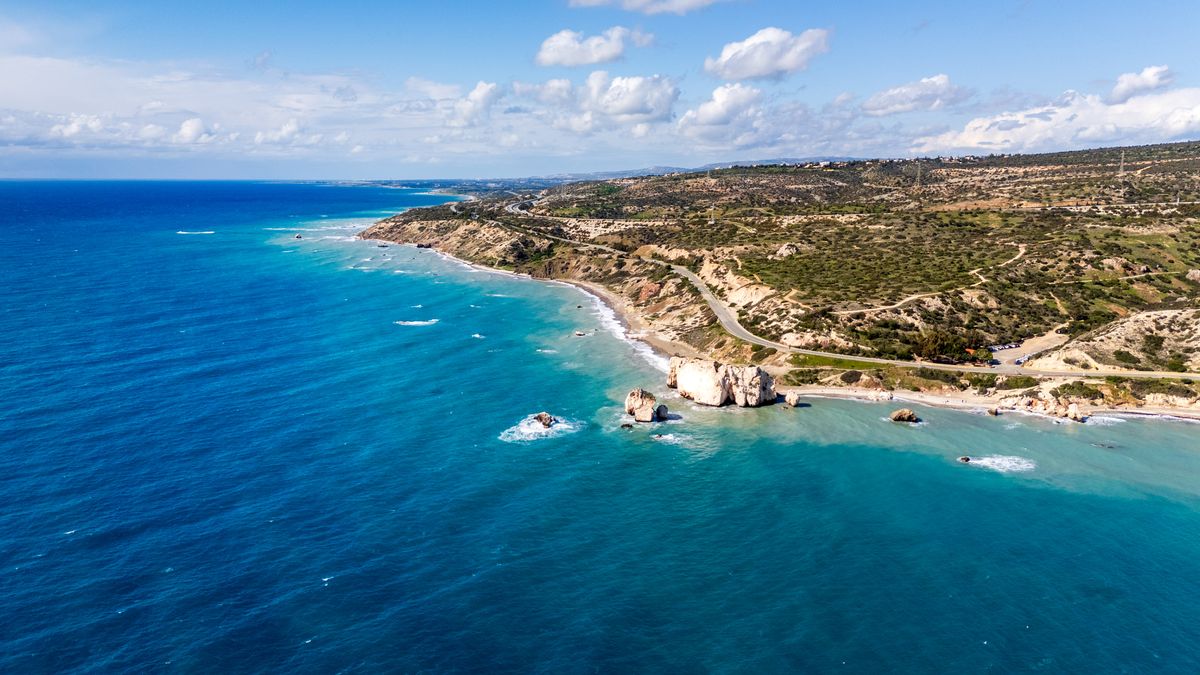
According to mythology, Aphrodite was born from the sea foam where the titan Uranus’ severed genitals fell into the Mediterranean. She washed ashore on the coast of Cyprus, where the rocks still glow with the pinkish hue said to be stained by her arrival. From that moment, Cyprus became her sacred island, and for millennia, pilgrims have travelled here to honour her.
This trail follows Aphrodite across Cyprus, from her birthplace on the coast to her mountain sanctuaries, through ancient temples, medieval churches, and natural wonders associated with the goddess.
Stop 1: Petra tou Romiou (Aphrodite’s Rock)
This is where it all began. Petra tou Romiou — “the Rock of the Greek” — is a large sea stack just off the coast between Paphos and Limassol. According to legend, this is where Aphrodite emerged from the foam, blown ashore by the western wind Zephyrus.
The beach below the rock is pebbly but stunning, and the view at sunset is otherworldly. There’s a viewing platform on the coastal road with informative plaques about the myth. Legend says that if you swim around the rock three times at midnight under a full moon, you’ll be blessed with eternal beauty — or at least find true love.
Practical info: Free to visit. There’s a small car park on the coastal road. Be cautious swimming here — the current is strong and the pebbles are slippery. Best visited in the early morning or at sunset for the best light and fewer people.
Stop 2: Aphrodite’s Bath (Akamas Peninsula)
A short drive north along the coast brings you to the Akamas Peninsula, a protected nature area of wild beauty. Here, in a small grotto shaded by ancient fig trees, you’ll find Aphrodite’s Bath — a natural rock pool fed by a small waterfall. According to legend, Aphrodite bathed here after her emergence from the sea, and the pool’s waters have rejuvenating properties.
The grotto is a peaceful spot, cool and shaded even at the height of summer. A fig tree draped over the entrance is said to be a descendant of the original tree that sheltered the goddess. The walk from the car park takes about 5 minutes along a paved path.
The Akamas Peninsula is also worth exploring for its natural beauty — the Blue Lagoon, the Avakas Gorge, and the wild beaches of Lara Bay (nesting site of green and loggerhead turtles) are all nearby.
Stop 3: Palaepafos (Old Paphos) and the Sanctuary of Aphrodite
This is the spiritual heart of the Aphrodite trail. Palaepafos (now the village of Kouklia) was the site of the most important sanctuary of Aphrodite in the ancient world. For over a thousand years, pilgrims from across the Mediterranean came here to worship the goddess, and her sanctuary rivalled those of Delphi and Olympia in prestige.
The site includes the ruins of the Sanctuary of Aphrodite, a museum housed in a medieval manor house, and the remains of the ancient city. The most sacred object was a black conical stone (a baetyl) representing the goddess — a form of aniconic worship that predates the classical Greek statue of Aphrodite.
The site is a UNESCO World Heritage Site, part of the Paphos archaeological complex. Allow 1–2 hours. There’s a small entrance fee (€4.50). The museum has excellent displays of finds from the sanctuary, including terracotta figurines and inscriptions.
Stop 4: Paphos Archaeological Park and the House of Aphrodite
In New Paphos (the modern city), the Archaeological Park contains some of the finest Roman mosaics in the world. Among them, the House of Aphrodite contains a series of mosaics depicting scenes from the goddess’s mythology: her birth from the sea foam, her judgement on Mount Ida, and her adulterous affair with Ares.
These mosaics, dating from the 2nd–3rd century AD, are remarkably well-preserved, with vivid colours and intricate detail. The nearby House of Theseus, the largest Roman villa excavated in Cyprus, contains a famous mosaic of Theseus and the Minotaur — a reminder that Greek mythology permeated every aspect of life in ancient Cyprus.
The park also includes the Odeon (a small Roman theatre), the Agora, and the so-called “Tombs of the Kings” — underground burial chambers carved into the rock, dating from the Hellenistic period.
Practical info: Entrance €4.50. Allow 2–3 hours. Best visited in the morning or late afternoon — there’s little shade.
Stop 5: Kourion (the City of Eustolios)
Moving east along the south coast, Kourion is one of the most spectacular archaeological sites in Cyprus. Perched on a cliff overlooking the sea, this ancient city-kingdom dates back to the 12th century BC and was an important centre of the cult of Apollo (Aphrodite’s lover in some traditions).
The site includes a beautifully preserved Greco-Roman theatre (still used for performances today), the House of Eustolios with its early Christian mosaics, and the House of the Gladiators with its famous mosaic of gladiatorial combat. The view from the theatre across the Episkopi Bay is one of the most dramatic in Cyprus.
The connection to Aphrodite is more subtle here — she was worshipped at Kourion alongside Apollo and other gods — but the site gives you a sense of the world in which the goddess was revered, a world of city-kingdoms, temples, and theatres that dominated the island for a millennium.
Stop 6: Kykkos Monastery (The Mountain Sanctuary)
Our final stop takes us into the Troodos Mountains, to Kykkos Monastery, the wealthiest and most famous monastery in Cyprus. While dedicated to the Virgin Mary rather than Aphrodite, the monastery sits on the site of an ancient sanctuary associated with the goddess. The continuity is unmistakable — the sacred mountain was important long before Christianity arrived.
Kykkos houses one of three icons attributed to St. Luke the Evangelist, and its museum is one of the finest in Cyprus. The monastery’s gold-leafed interior is breathtaking, and the surrounding mountain forests of cedar and pine are some of the most beautiful landscapes on the island.
The drive to Kykkos takes about 90 minutes from Limassol or Paphos and passes through some of Cyprus’s most scenic mountain roads. Combine it with a visit to the nearby Troodos Botanical Garden and the Cedar Valley.
Practical Tips for the Aphrodite Trail
- Duration: Allow 2–3 days to do the trail properly. You could rush it in one very long day, but you’d miss the atmosphere.
- Transport: A car is essential. The sites are spread across the island, and public transport doesn’t reach all of them.
- Best time: Spring (April–May) or autumn (October–November) for pleasant weather. Summer is too hot for outdoor sites; winter can be cold in the mountains.
- Photography: The light is best at Petra tou Romiou at sunset and at Kourion in the morning.
- Combine with: If you’re doing this trail, also visit the Choirokoitia Neolithic settlement (a UNESCO site on the Larnaca–Limassol road) — it predates Aphrodite by 6,000 years but gives context to the island’s deep history.